Good Hope Trust
INTRODUCTION:
Doubtless, every country, every region, every village in Sub-Saharan Africa has a heart-breaking story to tell about the combined effects of poverty, women subjugation and HIV/AIDS. Tanzania likewise has been greatly affected as the country continues to lose a large number of the labour force including highly-educated individuals. Much as the situation is worse in the urban areas, it is equally bad in the rural areas where education about HIV/AIDS is far fetched. Kibosho Magharibi in Moshi Rural of Kilimanjaro Region has been hard hit by the scourge. People do not talk of HIV/AIDS in public. Those dying of HIV/AIDS are said to have been be-witched. As a result the spread of the Pandemic is on the increase. A house to house survey recently conducted has revealed that there are more than 3,000 HIV/AIDS Orphans out of a population of 19,212 (Kibosho Magharibi Ward) whose future is uncertain. The affected families and infected individuals and the community at large need education and counseling on how to control further spread of the Pandemic.
At the same time most villagers in Kibosho Magharibi Ward depend on the land and the weather for their survival. Maize, Beans and Bananas are the staple foods. Even those who manage to feed themselves and their families (and many do not) are hard-pressed to find money for other needs e.g. school fees, and uniforms for their children maintenance for their house and farm etc. Gender roles are clearly defined in the Chagga Tribe. Women cook, farm, clean, wash, raise children, fetch water and gather firewood. Men make decisions regarding management of the family’s resources and consume mbege
(locally brewed beer).
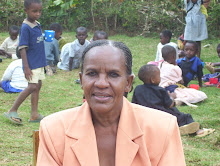
This disregard for women’s concerns, opinions and priorities regarding economic issues is mirrored in the sphere of sexual politics. Women do not have a voice about family planning, their husbands’ fidelity or the use of prophylactics. This coupled with the region’s high HIV/Aids. Good Hope Trust founder, Josephine Machuwa returned to her parent’s homestead at Kibosho Umbwe, Onana Village after living most of her life in Nairobi Kenya.
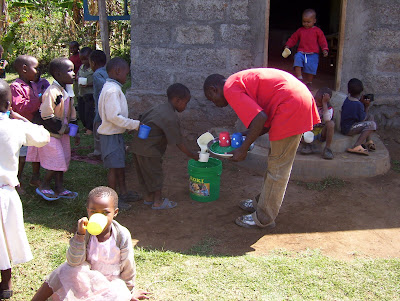
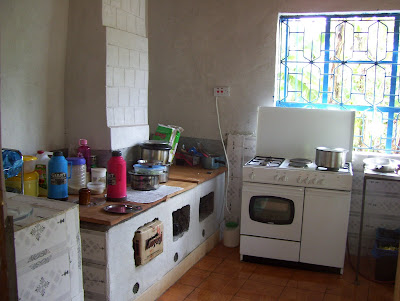
This homestead is the site of Good Hope Trust’s Orphanage Centre and recently built a Chekechea (Kindergarten). She does not charge for the Chekechea as nearby residents are not able to afford it. Public education in Tanzania is not free! They cannot continue in school past Nursery age until they learn English. She is entirely dependent on contributions to pay the teacher, a Matron, Security Guard, Cleaner, and a Gardener (for vegetable and maize plantation) to feed the orphans.
PROBLEM STATEMENT:
In response to the growing crisis of children orphaned by HIV/Aids in Kilimanjaro Region of Tanzania, Good Hope Trust is currently supporting children affected by AIDS in Kibosho Magharibi Ward (7 villages) in Moshi Rural. There are three factors shaping Good Hope Trust’s response to the crisis of Orphans and Vulnerable Children in Kibosho Magharibi Ward of Moshi Rural.
Magnitude:
In total, over 3000 children have lost one or both parents due to AIDS in Kibosho Magharibi Ward – (the collection of villages surrounding Good Hope Trust). Hundreds more are living with parents who are ill or with families that must stretch scarce resources to care for them. The enormous scope of the crisis requires a rapid scaling up of interventions, a broad resource base, and effective collaboration to ensure the best use of resources.
Duration:
By 2010, the number of children who will have lost one or both parents due to HIV/AIDS within Kibosho Magharibi Ward is projected to reach 5,000. That number will continue to increase. Addressing the long-term needs of families and communities affected by this crisis, this will require sustainable interventions that will need the needs of affected communities for two or more decades.
Complexity:
Children affected by HIV/AIDS suffer from the stigma and discrimination associated with the decease, the loss of caring adults, and depletion of house-hold financial resources. Interventions must go beyond health issues and respond to the broad range of child and family needs.
PROJECT GOAL AND OBJECTIVES:
Good Hope Trust is gearing its activities towards helping the Community develop and sustain strategies to meet the needs of Vulnerable Children by:
1. Strengthening the abilities of families to provide Care and Support.
2. Good Hope realizes that in trying to eradicate and prevent the HIV/Aids scourge, the question of poverty must be addressed. With financial help from well wishers, Good Hope Trust intends to begin small-scale income Generating Projects or raising and selling pigs. The initiative and labor to start these projects will come from the hands of the women and the management, decision- making, and profits will lie in those same hands.
3. The societal problems and institution that this group is challenging are huge, deeply-rooted and long-standing. And while they weigh heavy on the hearts of the Good Hope Trust, it is also a more tangible motivation for this Project. These women will create and secure a hopeful future for themselves and a better future for the Orphaned Children left behind under their care.
4. Mobilizing and Supporting Community-based Responses:
For children whose families cannot adequately provide for their basic needs, the Community is the next safety net. Good Hope Trust seeks to support Community-led initiatives to care for children and adolescents affected by HIV/AIDS. This could be through raising funds and provision of support for Home-based Care, Income Generation, HIV/Aids Prevention, Psychosocial Support, and School Fees for affected families.
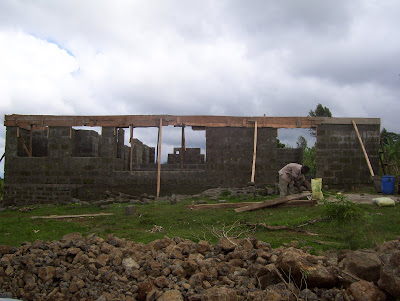
Helping Children and Adolescents Meet Their Own Needs; Good Hope Trust also intends to work towards ensuring that children and Adolescents attend school, trained in Vocational Skills and receive adequate Nutrition and receive health services. As a start a Free Nursery School (Kindergarten) or Chekechea has been launched recently. It Currently has 47 Orphaned and those living in hardships receiving free Nursery School Education as a means to follow them up to Primary levelby Good Hope Trust Project Coordinator. Good Hope Trust is also in the process of building a Resources Centre which is intended to help in income generating as well as giving a free (Voluntary Testing andCounseling) for the Community. The Centre will also be used for 50 HIV victims to collect their medicines and over-the-counter medicines.
Creating a Supportive Social Environment:
Good Hope Trust founder member currently sits in the District Board as a NGO (Non-governmental Organizations) Representative. She is also a board member of two secondary schools. Good Hope Trust intends to use this opportunity to influence the Government Resources and policies towards Protection of Vulnerable Children and provision of essential services. Another approach is to advocate for Basic legal protection, transforming public perceptions of HIV/AIDS, And strengthening HIV/AIDS Prevention and Mitigation efforts in the education sector.
GOOD HOPE TRUST TODAY:
Good Hope is concentrating on Orphans aged between 6 months to 17 years after which they will be able to move on while being monitored up to high school. Those Orphans already in school are being monitored by Good Hope Trust to ensure they are not misused by close relatives of these, e.g. sending them to fetch water, collecting firewood for cooking for the old “bibis” (grand-mothers), grazing cows/goats, and all sorts of odd jobs thus forcing them to drop out of school at a very early age and most of them end up as house servants, car loaders, and any other cheap labor. Good Hope Trust intervention is to give them qualityeducation to be able to face the future with hope.